Free CISO toolkit & security executive tools

Iliadis Executive Cyber Intelligence Suite

From signal to decision.

One suite. Six executive questions. One decision cycle.

Six purpose-built applications connect threat intelligence, security posture, quantitative risk, regulatory response, board reporting and strategic decision-making into one executive cybersecurity workflow — a free CISO toolkit built by Dr. John Iliadis as evidence of applied cybersecurity leadership rather than a set of standalone utilities.

Not six standalone utilities. One connected decision cycle.

Iliadis Executive Cyber Decision Cycle — ThreatPulse, CyberPulse, QuickRisk, EU Cyber Incident, BRIG and BoardSim
Six executive applications connecting threat intelligence, security posture, quantitative risk, regulatory response, board reporting and strategic decision-making.

One suite, six executive questions

From signal to decision — and back again.

Each application answers the question an executive asks at a different stage of the executive cyber decision cycle. No stage stands alone: the answer to each question changes the next one.

  1. Detect ThreatPulse What is happening?
  2. Assess CyberPulse How prepared are we?
  3. Quantify QuickRisk What could it cost?
  4. Respond EU Cyber Incident What happens if something goes wrong?
  5. Report BRIG What does the board need to know?
  6. Decide BoardSim What should we decide?

DETECT → ASSESS → QUANTIFY → RESPOND → REPORT → DECIDE → REPEAT

The cycle is continuous: decisions change the organisation's exposure, priorities and resilience — creating new signals that feed back into the next cycle. Find out more about the most recent cybersecurity applications I have authored, at my Github repositories.

The applications

Six applications. One operating model.

Each application addresses a distinct executive cybersecurity question. Together, they form a connected operating model for moving from threat signal to informed decision.

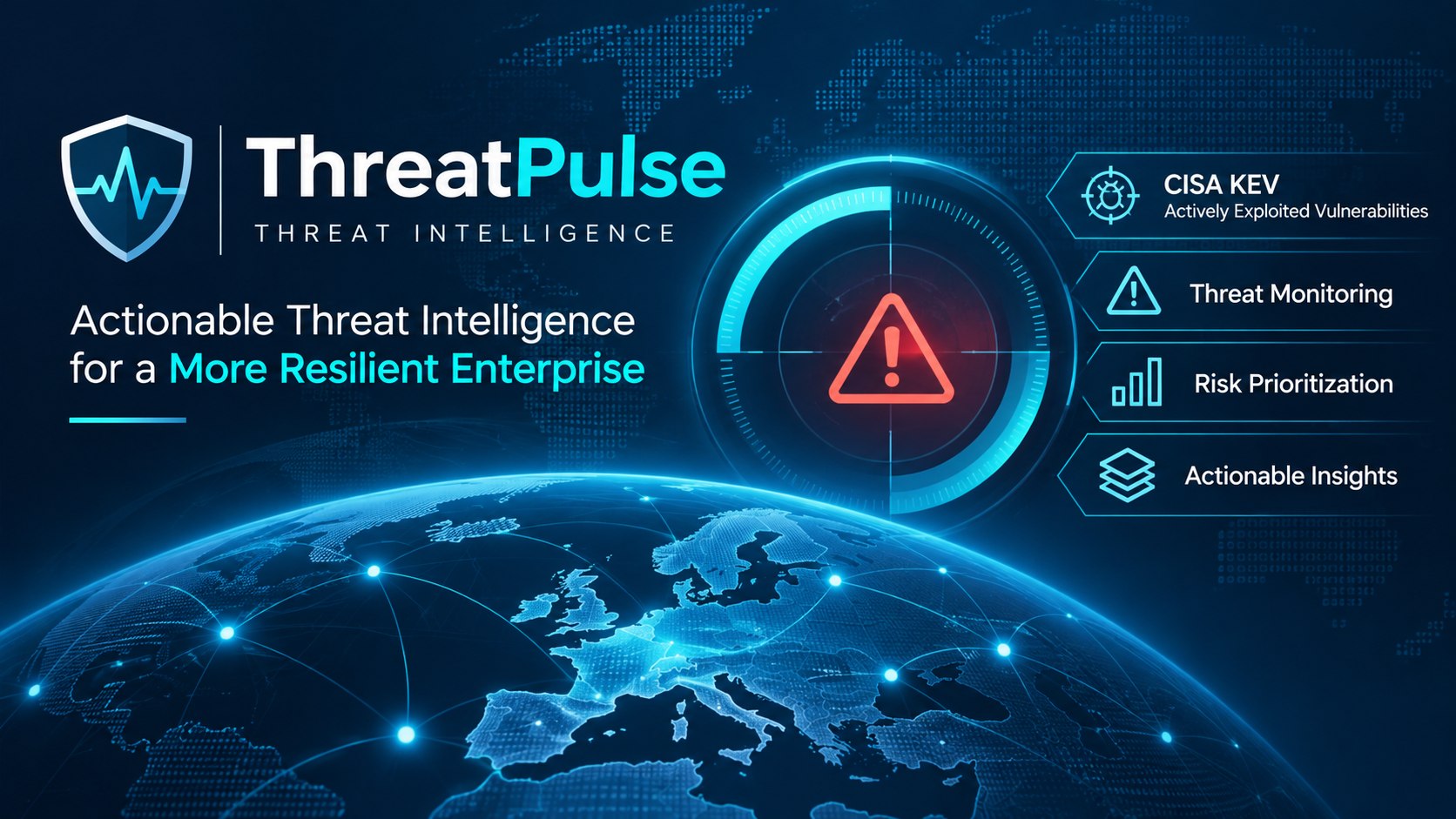
ThreatPulse banner — a threat-intelligence emblem and a radar gauge with a warning indicator, alongside panels for the CISA Known Exploited Vulnerabilities catalogue, threat monitoring, risk prioritization and actionable insights, over a wireframe globe of Europe
01 Detect

ThreatPulse

What is happening?

Prioritise the vulnerabilities and threats that deserve attention first, using normalised, scored threat intelligence.

ThreatPulse is a threat-intelligence and vulnerability-prioritization application that collects and normalizes current cyber-threat information to help cybersecurity professionals identify which vulnerabilities and threats deserve attention first. It brings together sources such as the CISA Known Exploited Vulnerabilities (KEV) catalogue and applies prioritization and scoring so that security teams can focus on the items most likely to matter rather than working through unfiltered feeds. ThreatPulse is an independently developed analytical application intended to support, not replace, professional judgement: its prioritization reflects the sources and scoring applied at the time of viewing and is not an assessment, certification or endorsement by CISA or any other authority. Users should validate findings against their own vulnerability-management, threat-intelligence and risk processes before acting on them.

Runs on a separate host: threatpulse.iliadis.net
Launch ThreatPulse →

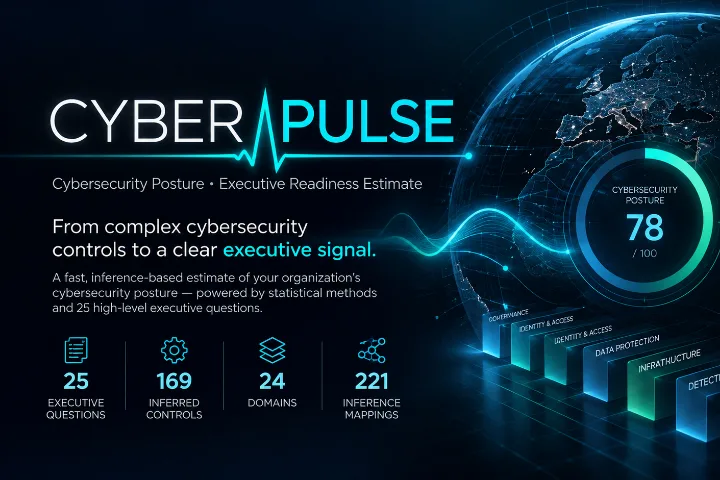
CyberPulse banner — a cybersecurity posture estimate of 78 out of 100, with 25 executive questions, 169 inferred controls, 24 domains and 221 inference mappings
02 Assess

CyberPulse

How prepared are we?

Turn 25 executive questions into a directional, evidence-based read on cybersecurity posture.

CyberPulse uses 25 high-level executive questions and statistical inference to provide an initial, directional indication of an organization's cybersecurity posture and highlight areas that may warrant further investigation or improvement. It is designed as a faster starting point than a detailed control-by-control assessment, using probabilistic methods and Monte Carlo analysis to represent uncertainty in the inferred results. CyberPulse is an independently developed analytical application and is not an official tool, certification, assessment or representation of the Greek National Cybersecurity Authority. Its results are indicative and should not be treated as a cybersecurity audit, compliance assessment, certification, professional advice or definitive representation of an organization's security posture.

Launch CyberPulse →

QuickRisk banner — a quantitative cyber-risk dashboard showing an expected annual loss exposure of 1.8 million euro with P10, P50 and P90 ranges, ranked risk drivers and a per-scenario loss breakdown
03 Quantify

QuickRisk

What could it cost?

Express cyber exposure as a range of possible loss rather than a single, misleading score.

QuickRisk is a FAIR-inspired quantitative cyber-risk assessment tool designed to turn uncertainty about cyber events and their potential impact into a more decision-oriented view of risk. It uses probabilistic modelling and quantitative analysis to explore the possible range of loss associated with defined cyber-risk scenarios rather than presenting risk as a single deterministic score. The tool is intended as a rapid, practical starting point for understanding likelihood, loss exposure, uncertainty and risk drivers. It is FAIR-inspired rather than a substitute for a full FAIR analysis, detailed risk assessment, professional judgement or organisation-specific quantitative modelling. Users should interpret results in the context of the assumptions and information entered into the assessment.

Runs on a separate host: quickrisk.iliadis.net

Launch QuickRisk →

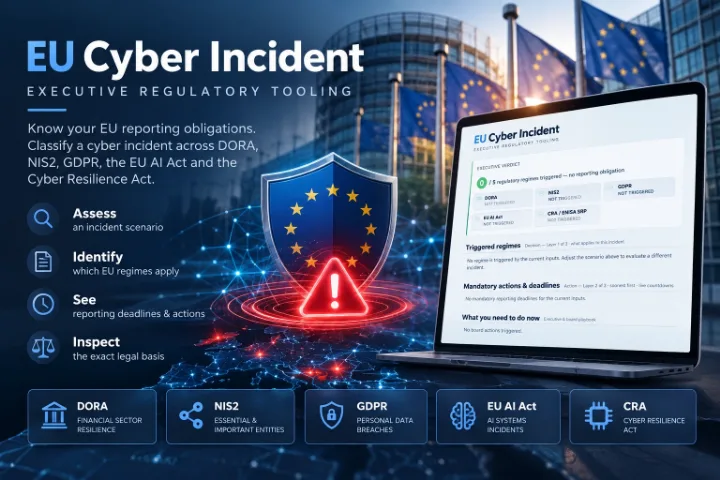
EU Cyber Incident banner — incident classification across DORA, NIS2, GDPR, the EU AI Act and the CRA, with the EU shield emblem and a reporting-deadline dashboard
04 Respond

EU Cyber Incident

What happens if something goes wrong?

Classify an incident and surface the regulatory deadlines and obligations that follow.

EU Cyber Incident is an executive regulatory discovery and SLA engine for exploring potential reporting and response obligations following a cyber incident. It helps classify an incident against major EU regulatory regimes including DORA, NIS2, GDPR, the EU AI Act and the Cyber Resilience Act, then presents applicable actions, deadlines and supporting legal references. The tool is designed to help cybersecurity, technology, risk and executive teams quickly understand the potential regulatory blast radius of an incident and identify what may require attention first. It is a preliminary discovery and educational simulation tool, not legal, regulatory, compliance or professional advice. Users should validate material decisions against the applicable legislation, competent authorities and qualified professional advice.

Launch EU Cyber Incident →

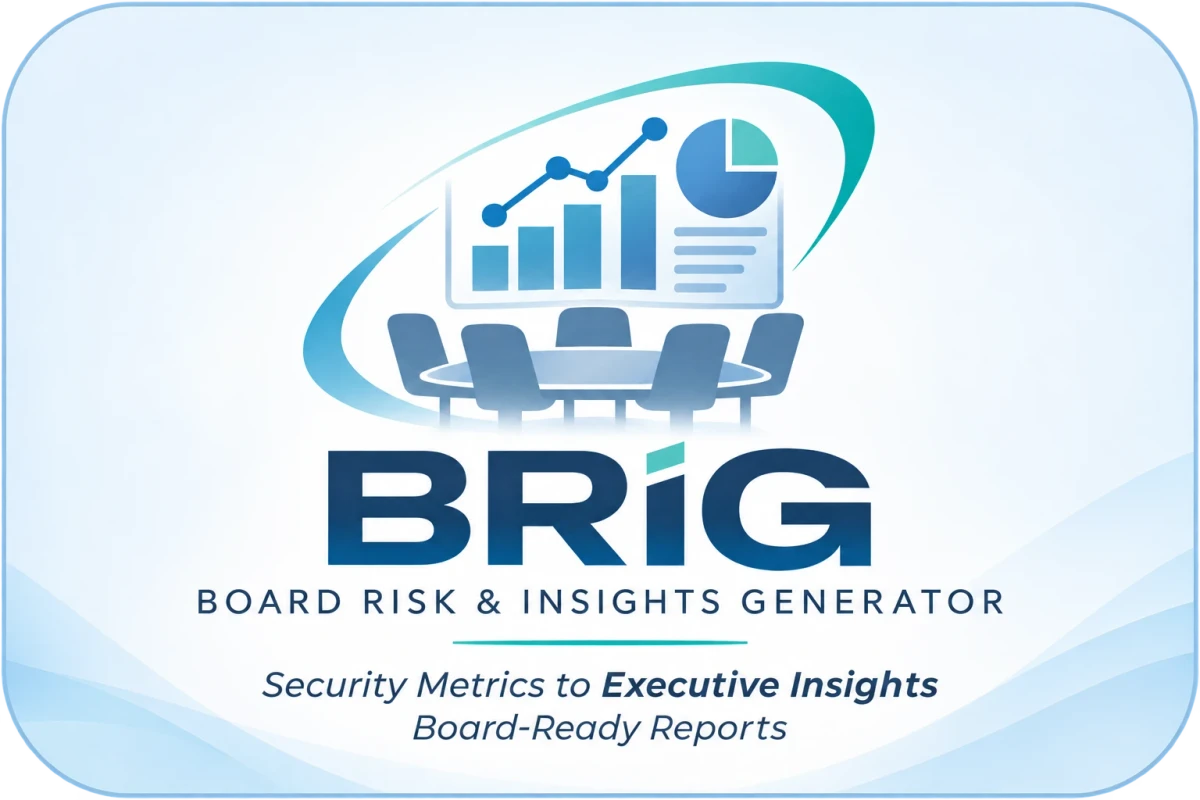
BRIG banner — Board Risk and Insights Generator: a cybersecurity metrics dashboard with bar charts, a trend line and a pie chart, captioned Security Metrics to Executive Insights and Board-Ready Reports
05 Report

BRIG

What does the board need to know?

Turn cybersecurity metrics into board-ready reports and executive insights.

BRIG (Board Risk & Insights Generator) is a cybersecurity reporting application that turns security metrics into board-ready reports and executive insights. It translates technical and operational cyber data — such as control coverage, risk posture, incidents and remediation trends — into clear graphs, statistics and AI-enhanced insights that boards and executive committees can understand and act on. BRIG helps technology and cyber leaders communicate security performance and risk in business terms. It is an independently developed analytical application intended to support, not replace, professional judgement, and its outputs should be validated against its own data and governance processes before being presented to a board.

Runs on a separate host: brig.iliadis.net

Launch BRIG →

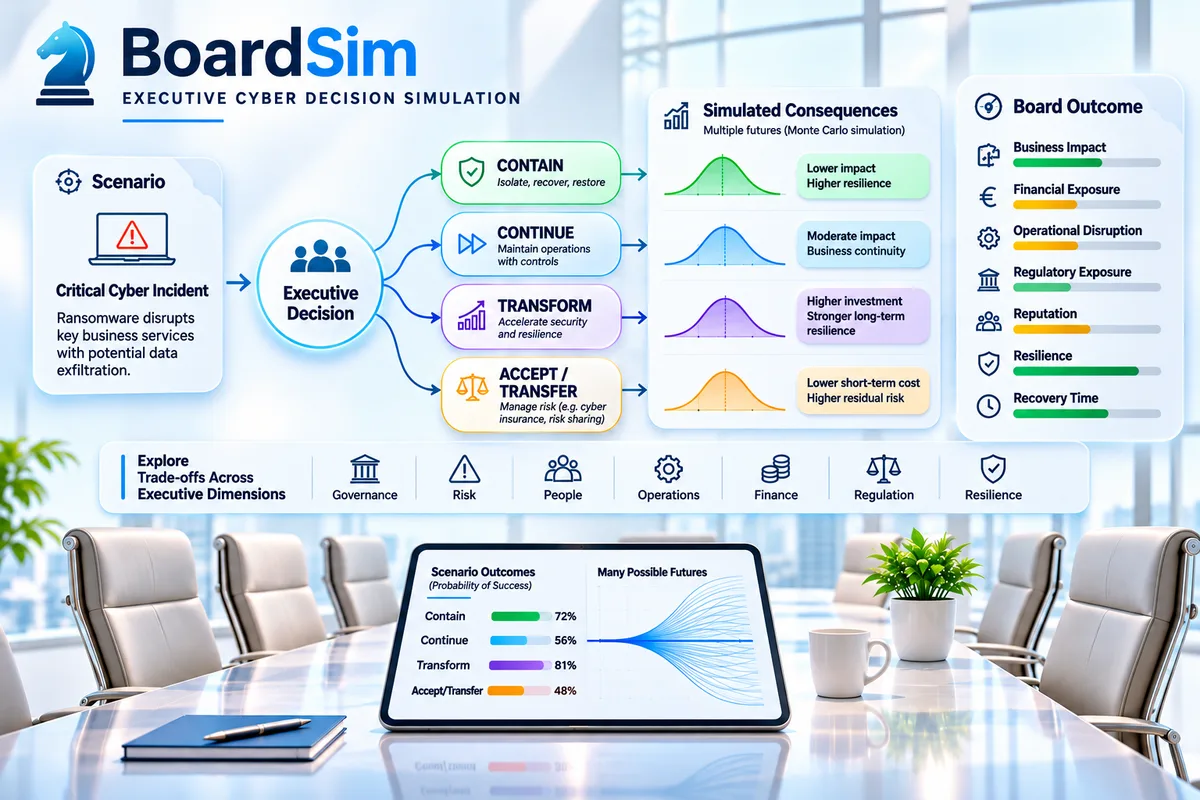
BoardSim — Executive Cyber Decision Simulator banner: a critical cyber incident scenario branches into contain, continue, transform and accept or transfer decisions, each with simulated consequence distributions and board outcome indicators for business impact, financial exposure, operational disruption, regulatory exposure, reputation, resilience and recovery time
06 Decide

BoardSim

What should we decide?

Simulate strategic cybersecurity decisions and see the consequences of each option before the board commits.

BoardSim is an executive cyber decision simulator. It lets a board work through a live scenario — for example ransomware disrupting key business services with potential data exfiltration — and compare the strategic options open to leadership: contain and recover, continue operations with controls, transform security and resilience, or accept and transfer the risk. Each option is simulated across multiple possible futures rather than a single forecast, so the trade-offs become explicit across business impact, financial exposure, operational disruption, regulatory exposure, reputation, resilience and recovery time. BoardSim is not another risk score, dashboard or compliance calculator: it is the decision layer that turns the information produced by the rest of the suite into a defensible choice, including the consequences of the alternatives not taken. It is independently developed and is not a prediction, audit or professional advice; simulated outcomes depend on the scenario, assumptions and judgements entered, and support rather than replace executive and board decision-making.

Runs on a separate host: boardsim.iliadis.net

Launch BoardSim →

The architecture

Why six?

Cybersecurity decisions rarely fail because information is unavailable. They fail when information is disconnected from the decision it is supposed to inform.

The Iliadis Executive Cyber Intelligence Suite connects six stages of the executive cyber-risk cycle: detect the signal, assess preparedness, quantify exposure, understand the response obligations, communicate the situation to leadership — and ultimately decide what to do.

Each application has a distinct role. Together, they form a single decision workflow in which the output of one stage becomes the input, and the challenge, for the next.

Evidence of capability

A decision system, not a collection of tools

Each application operationalises a discipline Dr. John Iliadis practises as a technology and cybersecurity executive — threat intelligence and vulnerability prioritisation, security posture, quantitative cyber risk, regulatory response under DORA, NIS2, GDPR, the EU AI Act and the Cyber Resilience Act, board-level cyber reporting and strategic decision-making.

The value is not in any individual application. It is in the connection between them.

Together they form one repeatable decision cycle: detect the threat landscape, assess preparedness, quantify business exposure, respond within regulatory deadlines, report performance to the board and decide what to change — then begin again, with new information. That is the working method of a 20+ year career spent turning technical and regulatory complexity into decisions a board can act on.

Detect. Assess. Quantify. Respond. Report. Decide. Repeat.

Executive decision domains

  • Cyber Risk
  • Threat Intelligence
  • Security Posture
  • Regulatory Exposure
  • Operational Resilience
  • Board Decisions

Built on

  • PhD · Information Security
  • CISSP · CISM · CRISC · C|CISO
  • 20+ years cyber leadership
  • ISC2 Hellenic Chapter leadership